
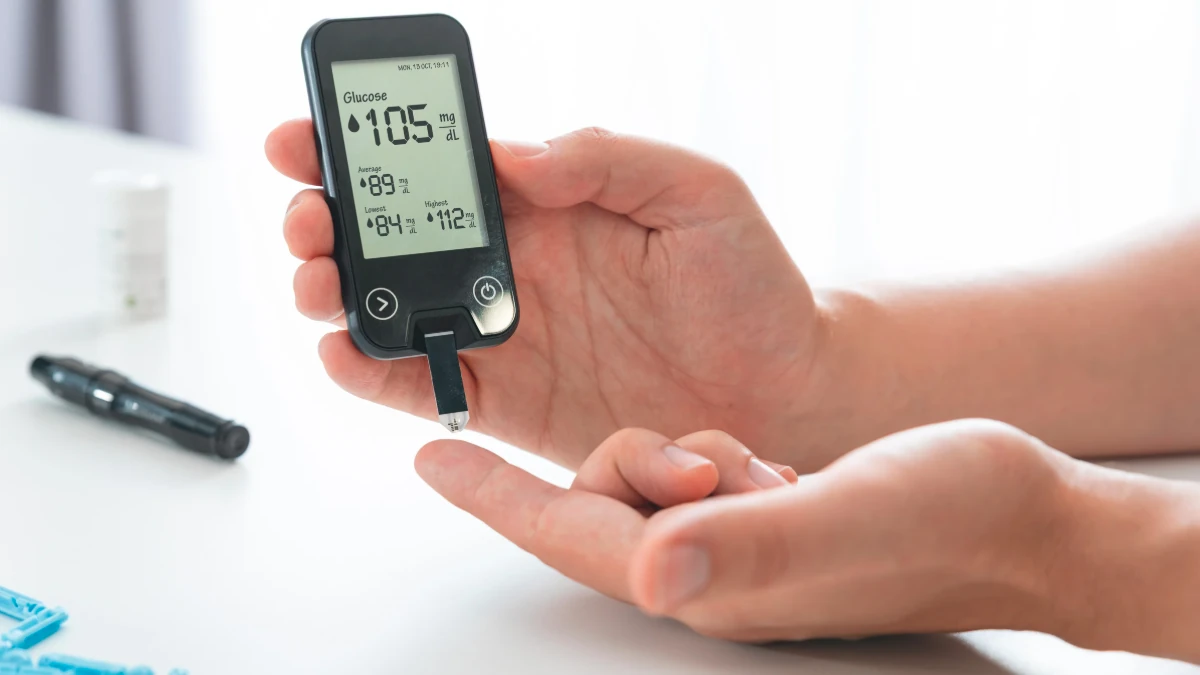
I used to think that a glucometer was a device strictly for my Titos and Titas who were already taking maintenance medicine.
Since I work from home and generally feel fine, I assumed my body was handling whatever I ate without any issues.
But I recently learned that feeling “fine” is a terrible way to measure metabolic health.
Sugar is invisible, and unless you are looking at the data, you have no idea what is happening inside your veins after that plate of Pancit Canton.
The “Healthy” Person Myth
We tend to believe that if our fasting blood sugar is normal during an annual physical exam, we are in the clear.
However, a groundbreaking study from Stanford University in 2018 shattered this assumption.
Researchers led by Michael Snyder found that many people classified as “healthy” by standard medical tests actually experienced diabetic-level glucose spikes after eating.[1][2][3][4]
In fact, 80% of participants spiked significantly after eating a bowl of cornflakes and milk.[1][4]
If cornflakes can do that, imagine what a Tapsilog with extra garlic rice and a sweet iced tea does to our system.
You might be walking around with these massive spikes every single day and not feel a thing.
The Damage You Can’t Feel
The problem with these silent spikes is that they aren’t harmless.
When your blood sugar shoots up rapidly, it can cause inflammation and oxidative stress in your blood vessels.
It is like revving your car engine into the red zone every time you stop at a traffic light; eventually, something is going to break.
I realized that just because I wasn’t gaining massive amounts of weight didn’t mean my body wasn’t struggling.
There is actually a term for this: TOFI, or “Thin Outside, Fat Inside.”
You can look relatively normal on the outside but have visceral fat wrapping around your organs, messing with your insulin.
The Filipino Food Trap
Living in the Philippines makes this battle even harder because our food culture is heavily reliant on carbohydrates.
It isn’t just the obvious desserts like Halo-Halo or Leche Flan.
It is the savory foods that betray us, like the sweet sauce in Pinoy-style Spaghetti or the breading on our favorite fried chicken.
I was shocked to see how high my numbers went after eating a simple burger from a popular fast-food chain.
We often eat rice three times a day, sometimes with a side of noodles or potatoes, creating a “carb-on-carb” disaster.
Without a glucometer, I would have kept eating these combinations, thinking they were harmless.
Your Fuel Gauge for Health
Think of a glucose monitor as the fuel gauge on your dashboard.
You wouldn’t drive your car across the country with the dashboard covered up, guessing how much gas you have left.
Yet, that is exactly what most of us do with our bodies until we get a scary diagnosis from a doctor.
Tracking my sugar has taught me exactly which foods my body can handle and which ones I need to avoid.
For example, I learned that I can eat Lechon Manok without issues, but even a small serving of Kakanin sends my numbers flying.
Prevention is Cheaper than Cure
I know that buying a testing kit and strips costs money.
But when I compare the price of a test strip to the cost of maintenance medicine for diabetes, the choice becomes clear.
It is much easier to adjust your diet now than to manage a chronic disease for the rest of your life.
You don’t even have to do it every day forever.
Just testing yourself for a few weeks can give you enough data to change your life.
So, go ahead and prick that finger; the data might just save you.
Sources